Heinz Albers presents:
The History of
Fletcher- Class-Destroyers
of the Federal German Navy
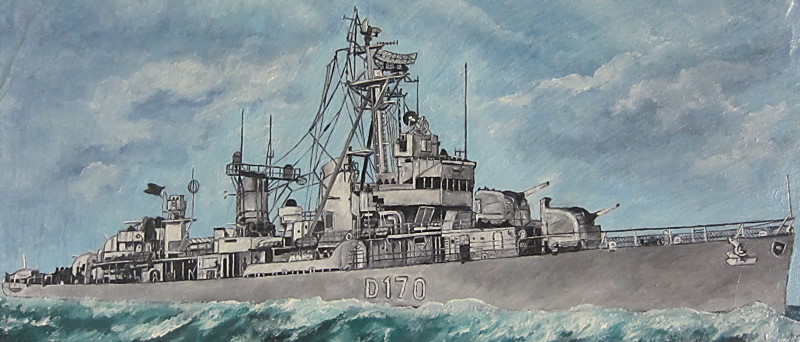
The Anthony (DD-515) was launched 20 December 1942 Bath Iron Works Corp, Bath, Maine: sponsored by Misses Alice and Frances Anthony; and commissioned 26 February 1943, Lieutenant B. Van Mater in command. Anthony steamed to the Pacific in May 1943.
The following months were spent in training and escort duty out of Pearl Harbor. On 1 November 1943 she provided fire support at the landing at Empress Augusta Bay, Bougainville, as flagship of Destroyer Division 90. A week later Anthony helped defend transports carrying reinforcements against a very strong Japanese air attack, shooting down several planes. For the next few months the ship conveyed transports and supply ships in the Solomon Islands; conducted anti-shipping sweeps; and took part in the bombardment of Rabaul, New Britain (24 February 1944).Anthony furnished fire support for the landings on Green (15-19 February 1944), Emirau Islands (20 March), Saipan (14 June - 8 July), Guam (12 July - 9 August and Tinian (24 July).
During the Battle of the Philippine Sea (19 - 20 June 1944) she rescued several carrier pilots who had run out of gasoline returning from strikes against the Japanese fleet.
During August - October 1944 she had convoy duty, followed by an overhaul at San Francisco (October - December ) . In January she returned to the Western Pacific to take part in the invasions of Iwo Jima (19 February - 6 March 1945) and Okinawa.
During 1 April - 24 June 1945. Anthony served as a radar picket off Okinawa, and helped repel five heavy air attacks, with only slight damage on 26 May and 7 June 1945.
Following her Okinawa service Anthony joined TF 95 in sweeps along the China coast during July and August. She entered Nagasaki, Japan, 14 September and remained in Japanese waters until 17 November 1945.
Anthony received seven battle stars for her wartime exploits and the Navy Unit Commendation for her service at Okinawa
(1 - 19 April and 19 - 24 June 1945).
Anthony returned to Charleston, S. C., and was placed out of commission in reserve 17 April 1946.
She remained in "mothballs" until 29 April 1947 when she was transferred to Commandant, 6th Naval District for modernization and repair preparatory to transfer to Germany.
On 17 January 1958 the transfer was effected and she was renamed Z 1.
Z 1 (Zerstörer 1) D170,
German Fleet Destroyer Class 119:
| Date of Launch/ Dockyard |
Dec 20, 1942 as USS Anthony (DD
515) Bath lron Works Corp. Bath, Maine (USA) |
||||
| Taken over by the Federal German Navy | Jan 17, 1958 | ||||
| Type and class of ship | US-Fletcher-Class Destroyer German Fleet destroyer Class 119 |
||||
| Other ships of the same class in the Federal German Navy |
Z 2, Z 3, Z 4, Z 5, Z 6 | ||||
| NATO-Hull Number | D170 | ||||
| Ship’s Compliment | 250 |
Measurements:
| Displacement (fully equipped) |
2750 ts |
| Length | 376 ft (114,74 m) |
| Beam | 40 ft (12,0 m) |
| Draught | 16 ft (4,41 m) |
| Propulsion | Steam turbines
(60,000 hp) |
| Speed | 35 kts |
Armament:
| 5 | 5’’ single turret guns |
| 3 | 3’’ twin guns |
| 5 | Torpedo tubes |
| 2 | ASW Torpedo tubes |
| 2 | Hedgehogs |
| 10 | Depth charges |
| 2 | Mine laying facilities |
Times of Active Duty and List of the Commanding Officers
a) January 17, 1958 until March 31, 1967:
| FKpt Trummer | Jan 1958 - Mar 1959 |
| FKpt/KptzS Birnbacher | Apr 1959 - Oct 1960 |
| FKpt Vorsteher | Oct 1960 - Jul 1961 |
| FKpt Werner Winter | Jul 1961 - Sep 1962 |
| Fkpt Grothe | Oct 1962 - Mar 1964 |
| FKpt Haenert | Apr 1964 - Mar 1965 |
| FKpt Goetschke | Mar 1965 - Oct 1966 |
| FKpt Proettel | Nov 1966 - Mar 1967 |
b) August 19, 1968 until March 17, 1972:
| FKpt Gaude | Aug 1968 - Sep 1970 |
| FKpt Kolvenbach | Oct 1970 - Sep 1971 |
| reduced Crew | Oct 1971 - Mar 1972 |
Final destiny
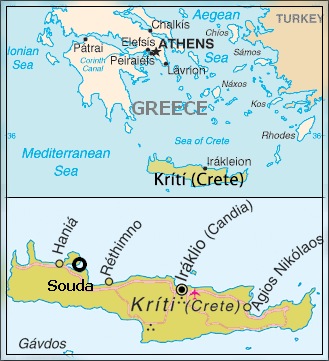
With the decommissioning on March 17, 1972 the ship was “written off”. The destroyer was not given back to the USA, but bought by the Federal Government of Germany. She was brought into the Naval Yard in Kiel and used for cannibalising for the other remaining destroyers of the same class (Zerstörer 2 through 5). On April 15, 1972 she was stricken off the List of US-Naval Ships. During 1978/79 she was used as target vessel for guided missiles by the island of Crete; and there she finally was sunk on May 16, 1979 at 10:15 hrs by a torpedo shot.
Note:
At the commissioning there was at the bow a Z 1 sign fixed, and on either side aft it read Zerstörer 1. After the arrival in Germany these name tags at bow and stern were taken off and the NATO number D170 was fitted. Added were two brass name plates Zerstörer 1, which were fixed on either side just below the bridge.
In order to enable her Navy to fulfil her mission, the Federal Republic of Germany bought or leased older ships of NATO partners – the necessary time for planning, building and shaking down larger ships could not be afforded. First of all one Fletcher Class destroyer was leased in the USA. April 1957 saw the beginning of the general maintenance and refurbishing of the USS Anthony for the Federal German Navy.
1958
Work was finished at the beginning of the New Year and on January 17, 1958 the Federal German flag was raised aboard and the ship was put into commission as Zerstörer 1 in Charleston, VA. She was the first ship of the Federal German Navy with a Combat Information Centre (CIC). Her seafaring days started again from Norfolk with some trial runs (she still made a top 35 kts). From Portsmouth, VA Destroyer 1 started her “homecoming” to Germany on March 31. After a stopover in Ponta Delgada she reached Bremerhaven on April 14, where Undersecretary of State Dr. Rust, Naval Secretary Admiral Ruge and Admiral of the Fleet Johannesson welcomed the ship and her crew. She left harbour again on April 26 and steamed into Kiel – her new home port – on April 27. After a short stay in a shipyard, during which the destroyer received her NATO number D170, she exercised with German and Danish Fast Patrol Craft in July and took part in her first manoeuvre (“Wallenstein I”) in the Baltic and North Sea (August 11 till 30). In Danish waters she was rammed by the Swedish motor vessel Hermia on August 22 but received only minor damages. September 1 saw the commissioning of the First Destroyer Squadron (1. Zerstörergeschwader) and Zerstörer 1 was put under its command (before that she belonged to the Command of the Destroyers). She went out for her first NATO manoeuvre (“Tiger Blue” from October 1 until 10) in the North Sea and afterwards she lay in the shipyard “Howaldtswerke” in Kiel from October 1958 until March 1959.
1959
For this year can be noted the manoeuvre “Wallenstein II” (June 9 to 21 and June 28 until July 8) and Dutch-German exercises in August and September, together with the German submarines U-Hai and U-Hecht.
1960
The First Destroyer Squadron with the ships Zerstörer 1, 2, and 3 took part in the NATO manoeuvre “Wolf Gris” in the North Sea (May 2 till 15). In August there were squadron exercises in Norwegian waters and a visit to the Sognefjord from August 13 till 15. Another manoeuvre – “Wallenstein III” (June 30 till September 7) – which was commanded by Admiral of the Fleet Johannesson on board Frigate Scheer saw Zerstörer 1 in action as well. On September 18 the destroyer was visited by the Federal German President Heinrich Lübke, who came aboard for a short voyage to observe patrol boat manoeuvres in the Western Baltic. In November (20-23) Zerstörer 1 paid a visit to Chatham, GB – together with Zerstörer 2. November 28 until February 1961 marked another shipyard period, this time at Blohm & Voss in Hamburg.
1961
In April, Destroyer 1 visited Kristiansand (Norway) for a short time. After the International Kiel Week the entire First Destroyer Squadron left Kiel on June 25 for exercises in British waters and coastal shelling near Cape Wrath (North Scotland). By the end of July the ships were back in their home port. Naturally they had to take part in the official fare-well to Naval Secretary Admiral Ruge in Kiel on August 1. Already on August 7 the manoeuvre “Wallenstein IV” began under leadership of Admiral Johannesson on board Frigate Gneisenau in the North Sea, the Skagerrak and the Central Baltic. During this period the Berlin Wall was erected (August 13) and all Federal German Ships were put on immediate alert. The manoeuvres ended on August 24 with a steam pass in front of the retiring Admiral of the Fleet Johannesson, who was aboard Destroyer 6 for that ceremony.
1962
January till March in the shipyard in Hamburg. Exercises within the squadron in Norwegian (April 25 until May 3) and Danish waters (May 6 till 18). Again Destroyer 1 was part of the International Kiel Week (June 17 till 24); this year as flag-ship for Admiral of the Fleet Smidt. During October there were squadron exercises with French units and a visit to the harbour of Brest (France). Z-1 was back in Kiel on November 1. On December 11 there was given a good-bye parade for the retiring Admirals Gerhard Wagner (COMNAVBALTAP) and Hellmuth Freiherr von Wangenheim (COMGERNORSEA) in the Kiel Bight. After the last exercise cruise for the year, Destroyer 1 made fast in Kiel on December 19.
1963
Another term in the shipyard “Howaldtswerke” in Kiel (January 7 until April 23); this time the whole of the bridge was remodelled. On May 19 the entire First Destroyer Squadron under KptzS von Mutbus left from Wilhelmshaven to the USA. On the way Ponta Delgada (Azores) was visited (May 24/25). In Norfolk, VA, the Western Atlantic and the Caribbean the ships underwent a “refresher training”. The voyage back home started in Newport, RI on July 21 and went via Thomshavn (Faröer Islands, July 31) to Kiel, which was reached on June 2. All three destroyers left Kiel again on July 21 for squadron exercises in the East Atlantic – again visiting Brest – and in the Irish Sea, where they ran into a severe hurricane. By the end of November the squadron was back in Kiel.
1964
Again in the shipyard during March and April. After a voyage to Northern Europe in May and June, Destroyer 1 took part in several manoeuvres of the Destroyer Flotilla in the North Sea, the Skagerrak and in the North Atlantic during September. The First Destroyer Squadron under KptzS Schreiber went to sea from November 17 until December 19 in the Middle Atlantic and the Biscay, exercised with French forces and visited Brest (November 20 to 23), Las Palmas (December 4 to 9) and Gibraltar (December 10 to 16).
1965
This year began in another shipyard. She was in Flensburg from January 5 until February 2, followed by a few exercises. In May the three ships of the First Destroyer Squadron left for the next “Refresher Training” in the USA. On the way they had artillery and ASW exercises. They took over crude oil from the German Naval Support Tanker Frankenland. After Zerstörer 1 was in dock in Philadelphia from May 28 until June 12 all three German destroyers joined in with American units for a training period, in which the aircraft carrier USS Wasp took part as well. These exercises were interrupted on July 12 in order to search for survivors of a USAF plane which had crashed north-easterly of Boston. Although strongly hampered by fog, the crew of Zerstörer 1 was able to rescue three survivors and took aboard six bodies. The squadron left Boston on July 24 for Germany escorted and supported by the Naval Supports Frankenland and Angeln. By August 5 they were back in Kiel. On November 5 the three destroyers left from Wilhelmshaven for the French-German destroyer and ASW exercise “Gemex” in the East Atlantic and the Mediterranean under the command of FKpt Stricker. With the weather turning into a hurricane, of the six destroyers and two submarines only one sub and a destroyer (both French) and, of course, Zerstörer 1 stayed out at sea, all other units had gone back into port. Again Brest was visited. The squadron returned to Kiel on November 24.
1966
On January 10 Zerstörer 1 left Kiel for an Atlantic cruise, during which Lisbon (January 14-17) and Santa Cruz de Tenerife (January 21-27) were visited. The ship was back into Kiel harbour by the beginning of February. The next longer training cruise started in Kiel on June 5. Zerstörer 1, as leading unit of Squadron Commander KptzS Haag, with the other two destroyers, joined by the Naval Auxiliaries Dithmarschen, Münsterland and Eifel. On this cruise they visited Cadiz (June 10 till 13) and Las Palmas/Canary Islands (June 17 till 22). After diverse exercises the destroyers and the Münsterland went back to Kiel (July 7), whereas the two other auxiliaries went back to Wilhelmshaven. During the beginning of September Zerstörer 1 took part in the NATO manoeuvre “Botany Bay 66”. On September 7 the Danish car-ferry Skagerrak on her way from Kristiansand to Hirtshals received a leak and sank. Destroyer 1, together with other units which were in the vicinity immediately speeded towards the ferry’s last position to bring the necessary help. The manoeuvres ended on September 16. That marked the end of the first active period under German command of Zerstörer 1.
1967
On January 11 Zerstörer 1 made fast in the Naval Shipyard in Wilhelmshaven and preliminary work was begun for the (intermediate) decommissioning, which took place on March 31. The ship was tugged from Wilhelmshaven to Bremerhaven on April 3. In the NDL-Shipyard there the first part of general maintenance and modernizing programme was accomplished. Under her own steam the ship went back to Wilhelmshaven (November 18) for the final refitting of weapons and systems again in the Naval Shipyard.
1968
On August 19 Destroyer 1 was officially back to the line.
1969
During the inactive time of the ship the Command of the Destroyer Flotilla had been restructured. Zerstörer 1 now belonged to the Third Destroyer Squadron, but she could keep her old home port Kiel. After a few days of single cruising she exercised together with Zerstörer Hessen in Norwegian waters in January. In February followed some squadron internal training in the Western Baltic. The Third Destroyer Squadron with Zerstörer 1, 4 and 5 and the Naval Auxiliaries Meersburg and Münsterland left Kiel on March 1 for NATO manoeuvres in the Biscay and the Western Mediterranean, they anchored in sight of Alicante (March 11 to 15) and stayed in Lisbon (March 17 till 18). For the last part of the manoeuvre the Executive Officer, KKpt Louis-Ferdinand von Blanc, had to take over command from the Commanding Officer, FKpt Gaude, who had taken ill. After the arrival in Kiel (March 26) the CO took back his command. During April and May there were exercises and NATO manoeuvres in Norwegian waters, and on May 2 and 3 Drontheim was visited. Next was a squadron cruise round the British Isles (August 4 till 22) under the command of KptzS Grote. Because of fog the destroyers had to anchor near the Orkneys for a few days, they went through St. George’s- and the Bristol-Canal, moored at Amsterdam (August 18 till 21) and were back in Kiel on August 22. After August 26 until far into September there followed some squadron exercises (now joined by Zerstörer 2) in the Baltic, the Large Belt, the Kattegat, the Skagerrak and in the North Sea, taking over crude oil from the auxiliaries Frankenland and Emsland in the Skagerrak.
1970
At the shipyard HDW in Kiel for an intermediate overhaul from January 5 until March 6. July 7 until 24 the ships went out for squadron exercises in the East Atlantic and the Biscay, supplied by the Münsterland. During this period the paid a visit to Las Palmas/Canary Islands. August 22 saw Zerstörer 1 and 4 once more in helping action in the German Bight. The German Fishery Motor Vessel Vest Recklinghausen was in flames. The crew of Zerstörer 1 was able to rescue five men off the burning ship and brought them into Wilhelmshaven for further treatment. The destroyer’s hull had received some damage as well during the rescue, which immediately were set straight in the Naval Shipyard. Because of this incident Z 1 could only join in with the last part of the German destroyer exercise “Desex 70”, which ended August 31. In September followed the NATO manoeuvres “Northern Wedding” in the North Sea, the North Atlantic and along the Norwegian coast. The ship visited Frederikshavn (November 2 to 4), gave help to the averaged Dutch Coastal Vessel Rita on November 18 and was back in the Naval Shipyard in Wilhelmshaven for repairs on the aft guns from November 19 until the end of February 1971.
1971
Until the end of February repairs on the aft guns in the Naval Shipyard in Wilhelmshaven. The next German manoeuvre was “German Operation 71” under the command of the CO Naval Forces North Sea FAdm Klose in the North Sea and the Skagerrak which ended March 27. During exercises in the Baltic the crew discovered a smouldering fire which luckily could be put out with onboard means. Together with Zerstörer 2 and 4, Zerstörer 1 left Kiel July 6 for a squadron training cruise in the Atlantic, visited La Coruna (July 20 till 23) and went through some supply exercises with the auxiliaries Westerwald, Münsterland and Langeoog. They were back in Kiel on July 25 and Zerstörer 1 made fast at her old mooring, the “Scheermole”. A joint destroyer and sub-hunter exercise was to be her last voyage under the Federal German Flag. She went into the Western Baltic with destroyers Mölders, Z-3 and Z-4 and the sub-hunters Thetis, Najade, Triton and Theseus on August 19 and 20.
1972 - 1977
On October 4 the meanwhile badly reduced crew of Zerstörer 1 started with the preliminary work for the decommissioning (acting CO for this final task was KptLt Döring) in the Naval Yard in Kiel, the official date of which was March 17, 1972. The hull was used as “spare parts depot” for Zerstörer 2 und 5 during the following years.
1978
Destroyer 1 – now barely an empty hull – left Kiel on June 9 for the last time, towed by the German Naval Tugs Helgoland and Norderney. The voyage went round the Skagerrak, through the North Sea, the Biscay and the East Atlantic to Ceuta, which the tugging convoy reached on June 19. Two days later they went on to Crete (Kriti) where Zerstörer 1 was anchored in Souda (Suda) Bight on June 26. There she served as target vessel for guided missiles (i.e. by German Tornado aircraft armed with Cormorant missiles).
1979
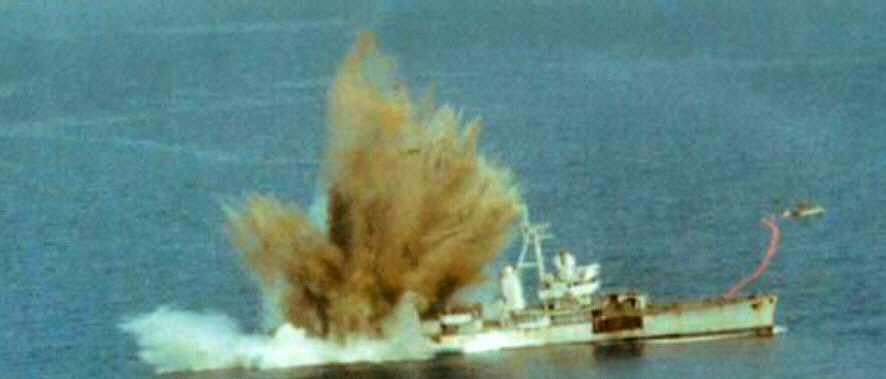
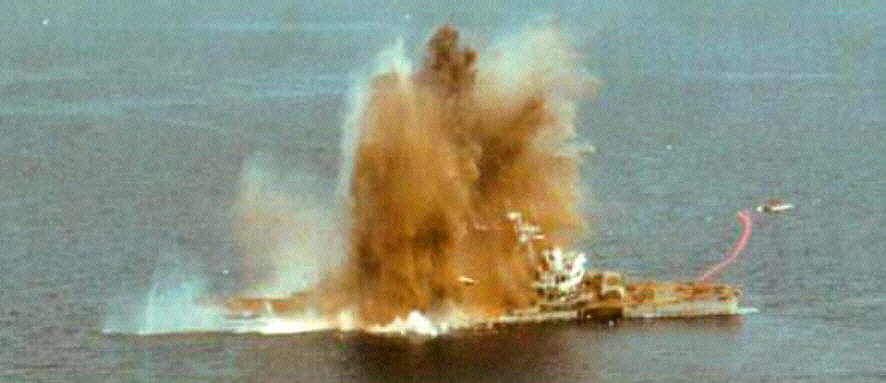
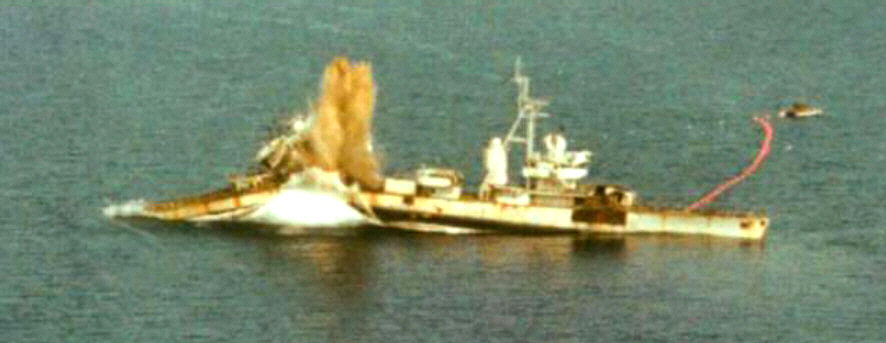
A torpedo launched by the German Uboat "U 29" hit Zerstoerer 1 at 10:15 a.m. on Mai 16, 1979. The destroyer sank 18 mins later into the mediterranean waves.
As a target ship "Z 1" had the following measurements: 1,783.5 tons, draught bow 3.23 m (10 ft 7"), midships 3 m (9 ft 10"), aft 2.7 m (8 ft 10.3").
-------------------------------------
Z 1 (D170) ex USS Anthony (DD515) torpedoed:
Map of Crete, Souda Bight:
Zerstörer 1
Zur Website von Heinz Albers